
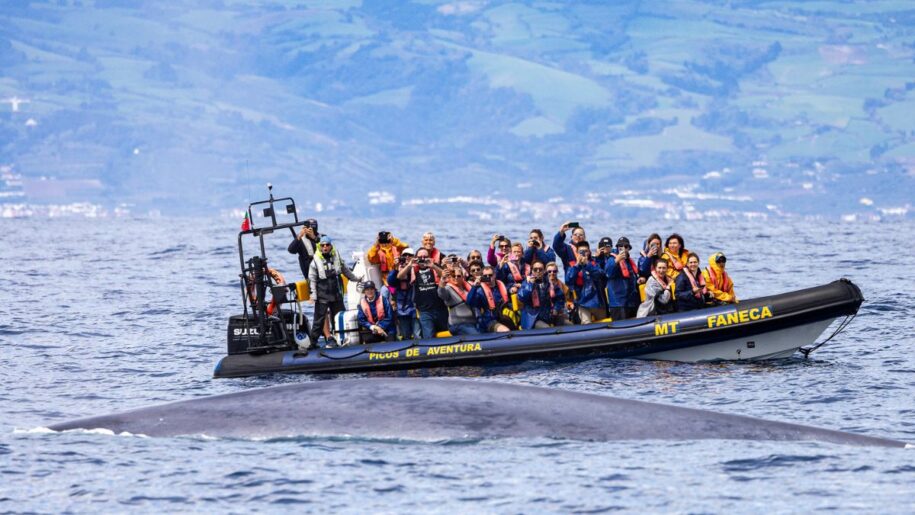
The year 2025 came to an end as a particularly distinctive period in terms of cetacean sightings, with a high number of whales remaining around the island well beyond the summer season. This report summarizes these observations through graphs and percentages, reflecting a complete cycle of survey effort, encounters, and behavioral patterns throughout the year.
Beginning with the baleen whales (Fig. 1), the most representative species at the start of the year were the blue whale (Balaenoptera musculus) and the fin whale (Balaenoptera physalus(navy blue and orange lines, respectively). These species are typically observed in the Azores from late winter through spring. However, their sighting records have been declining in recent years, possibly as a result of climate change, reaching in 2025 maximum values of only 35% for the blue whale and 12% for the fin whale.
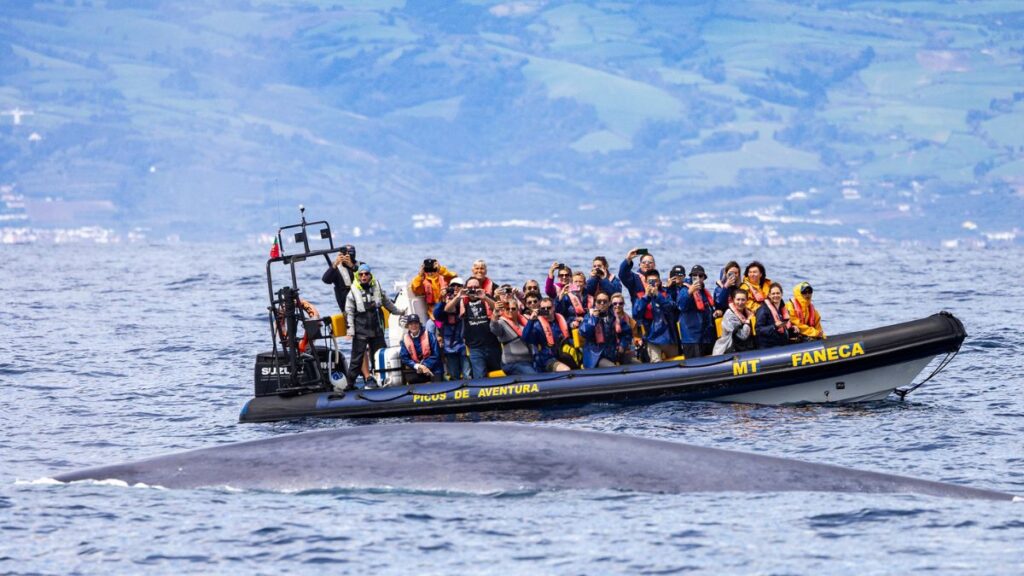
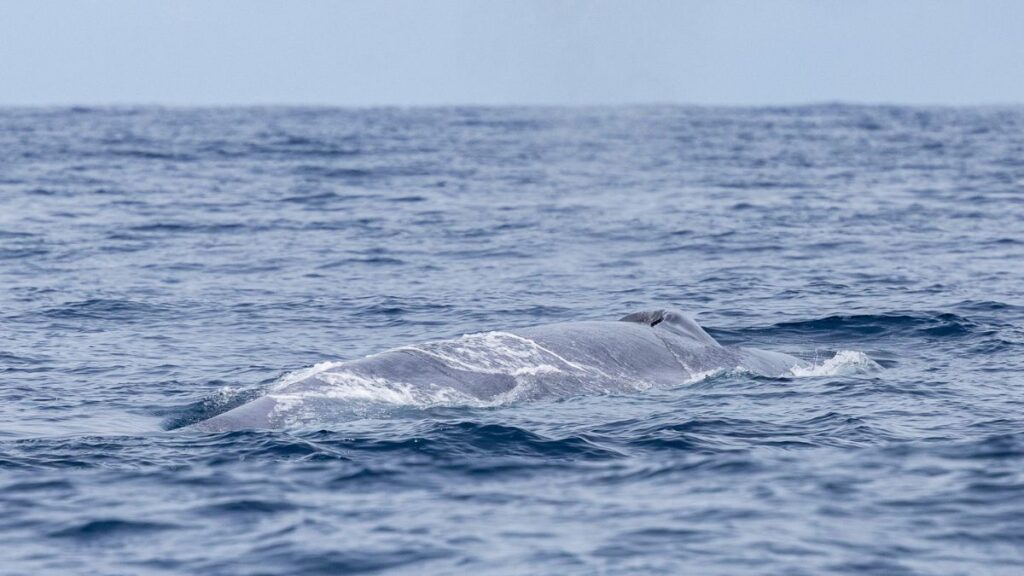
During this period, the presence of the emblematic humpback whales (Megaptera novaeangliae) (pink line) was also recorded. These whales stood out due to their acrobatic behavior, including occasional breaching, a relatively rare phenomenon in the Azores that did not go unnoticed by observers.
In spring, sei whales (Balaenoptera borealis) and Bryde’s whales (Balaenoptera edeni) were also observed (grey and light blue lines, respectively), species that assumed a prominent role during the summer.
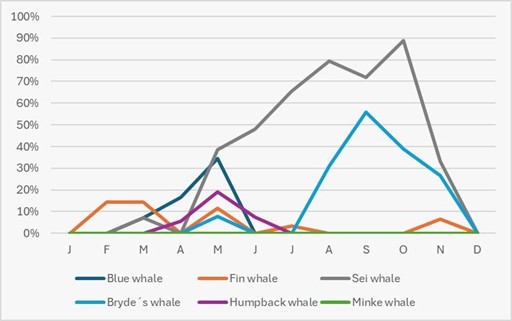
In September, these whales were present in 72% and 56% of the surveys conducted, respectively. In 2025, both species remained for a longer period offshore of São Miguel Island, following the trend observed in recent years, also associated with climate change. The sei whale, in particular, stood out, exhibiting a sighting probability of 90% in October.
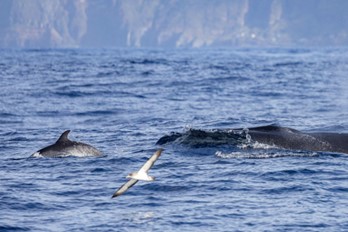
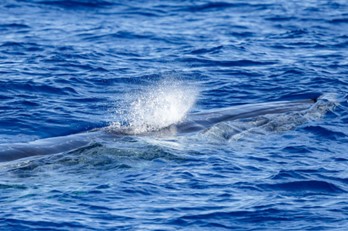
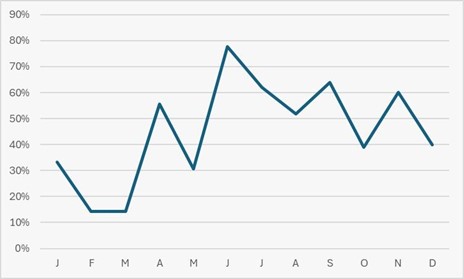
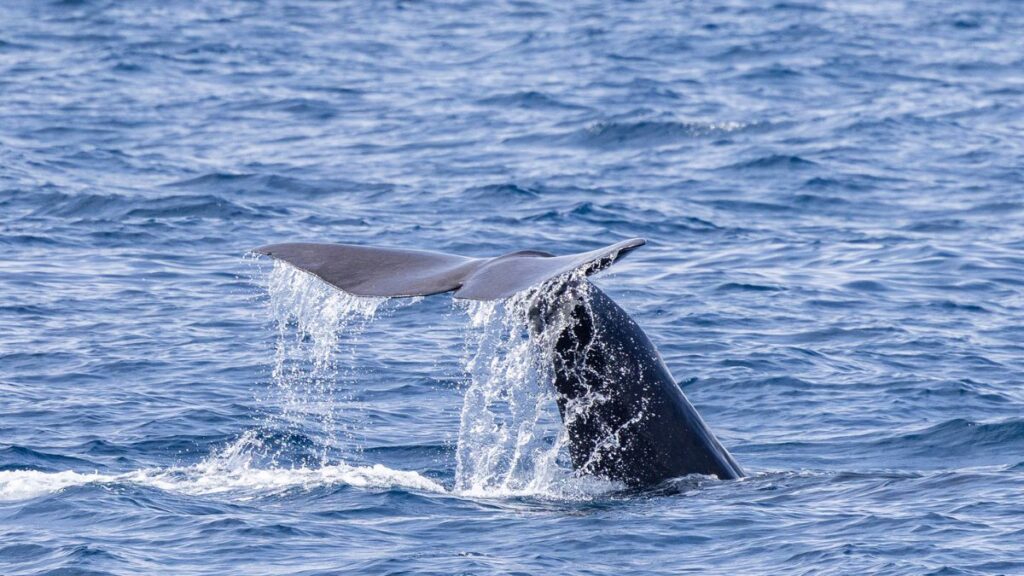
Next, we highlight the sperm whale (Physeter macrocephalus), considered the emblematic cetacean species of the Azores (Fig. 2). In 2025, this species once again met expectations, having been recorded throughout all months of the year, with higher frequencies during the summer. In the first half of the year, the number of sightings was lower, partly due to the prioritization of migratory species, whose observation is restricted to that period.
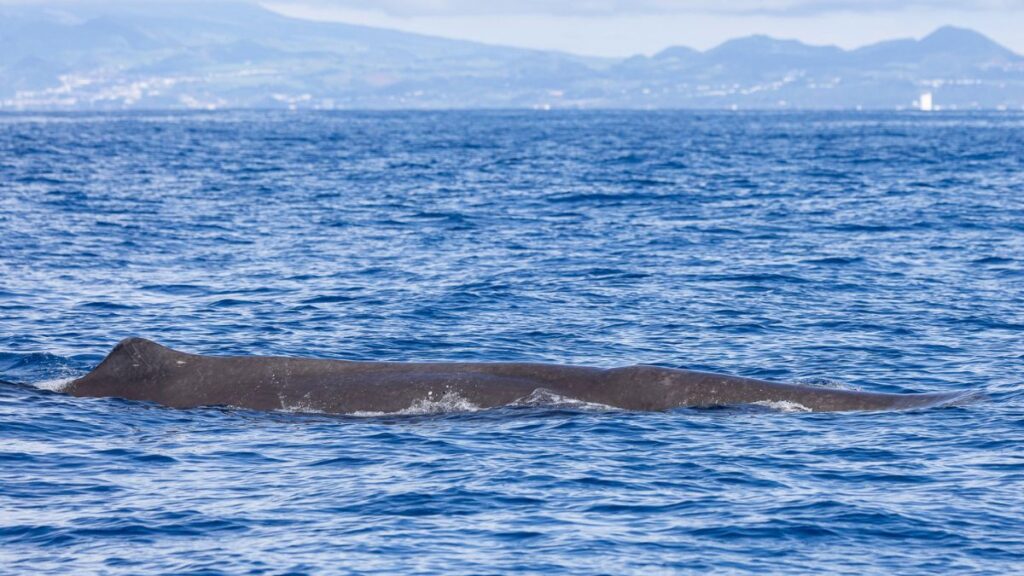
Nevertheless, sperm whales provided numerous remarkable sightings, with a wide diversity of behaviors observed. Individuals were frequently recorded resting at the surface, engaging in social interactions, breaching, approaching vessels, and displaying their flukes immediately prior to deep dives. On occasion, large aggregations of up to 20 individuals were observed within the same area, reflecting the importance of this region for the largest resident species, which is simultaneously the largest toothed cetacean on the planet.
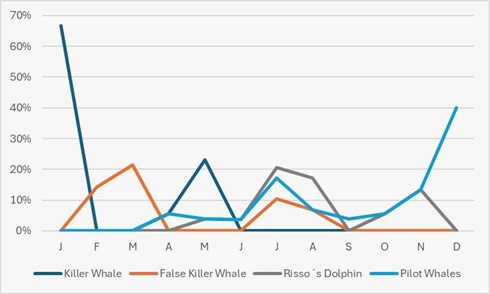
We then highlight the group of dolphins commonly referred to as “blackfish” (Fig. 3), which includes the largest dolphin species: killer whales (Orcinus orca), false killer whales (Pseudorca crassidens), false killer whales (Globicephala melas), and Risso’s dolphins (Grampus griseus). These species are occasional sightings around São Miguel, making each encounter a particularly special observation opportunity.
The year began in a remarkable way with sightings of killer whales (navy blue line), which were observed hunting a leatherback sea turtle (Dermochelys coriacea), the largest turtle species in the world. These same killer whales were also recorded during spring, frequently approaching whale-watching vessels.
Pilot whales (light blue line) and false killer whales (orange line) showed similar sighting frequencies, although they exhibited distinct behaviors. Pilot whales tend to be calmer, often remaining at rest at the surface, whereas false killer whales demonstrate greater curiosity toward boats, approaching them regularly.
Risso’s dolphins (Grampus griseus, grey line) were among the species recorded throughout the entire year, although encounters around São Miguel remained relatively rare, reaching a maximum of only 22% of surveys in 2025. Adult individuals exhibit a whitish coloration resulting from the accumulation of scars on their skin. When swimming close to the surface, this characteristic gives them a turquoise-blue hue, making sightings of this species particularly striking and unique.
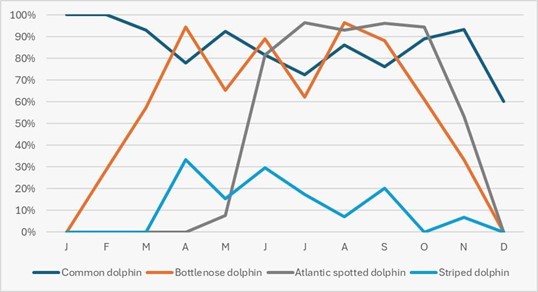
Finally, we highlight the remaining species of the dolphin family (Fig. 4), which, although representing the smallest cetaceans in the Azores, play an important role in the marine ecosystem and in local wildlife observation.
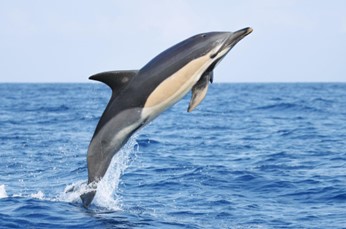
The common dolphin (Delphinus delphis, navy blue line) is one of the resident species, recorded throughout the entire year, with a sighting probability exceeding 60% during 2025. The bottlenose dolphin (Tursiops truncatus, orange line) also stands out, with frequent sightings during most of the year.Grampus griseus, linha laranja), com avistamentos frequentes ao longo da maior parte do ano.
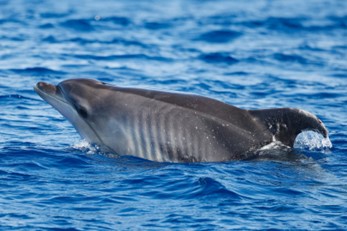
Atlantic spotted dolphins (Stenella frontalis, grey line) are a common species in the region, being present in nearly all surveys conducted during the warmer months, reflecting their predominantly tropical distribution. However, an extension of their presence around the island has been observed, possibly related to rising sea temperatures associated with climate change. The striped dolphin (Stenella coeruleoalba, light blue line) is an occasional species in the Azores, showing a lower and more irregular sighting probability compared to the other species represented. Nevertheless, when observed, it stands out due to its elegant coloration pattern, composed of two longitudinal black stripes along the body, as well as the impressive speed at which it moves through the oceans.
In summary, the year 2025 proved to be extremely productive in terms of cetacean sightings, allowing the documentation of multiple species throughout the entire year, as well as a wide range of notable behaviors. However, all the emotions experienced—both by us and by our clients—during unexpected and memorable encounters are impossible to quantify. We hope that 2026 will bring equally extraordinary experiences and that you will continue to join us in exploring the rich marine biodiversity of the Azores.
Written by Emilio Sanchez and Catarina Cunha.
Interested in this activity? Book your Azores sea experience with us here.

