
Priolo
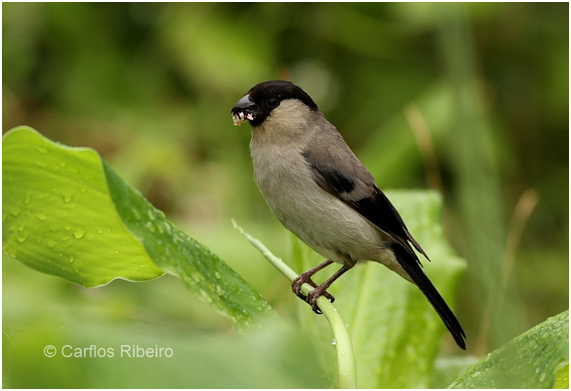
The Priolo (Pyrrhula murinait is a small bird with about 16 centimeters and 30 grams in weight. In this species, males and females are quite similar and the juveniles are distinguished by their brownish coloration on the head.

Figure 1: Picture of two Priolos.
This bird can only be found in a small area in the northeast of São Miguel Island. It is a 100% São Miguel passerine and was classified as Critically Endangered by the IUCN Red List of Threatened Species, between 2005 and 2010. The main cause for this classification was directly related to the loss and fragmentation of the Laurissilva forest. This forest is unique and Priolo depends on it to survive. In fact, the diet of this bird is based on different types of vegetation, about 40 different species, and the vast majority of these species are native to the Laurissilva forest.
The Laurissilva forest is native to the Azorean region and this bird is completely adapted and dependent on it. However, it has undergone major changes. Some areas were cut for the planting of crops (pasture and other agricultural crops), others suffered a profound change in plant species due to the uncontrolled proliferation of invasive alien species (such as the Conteira Hedychium gardnerianum). The disappearance of this forest also led to a huge decline in the existing population, with only 400 breeding birds remaining.
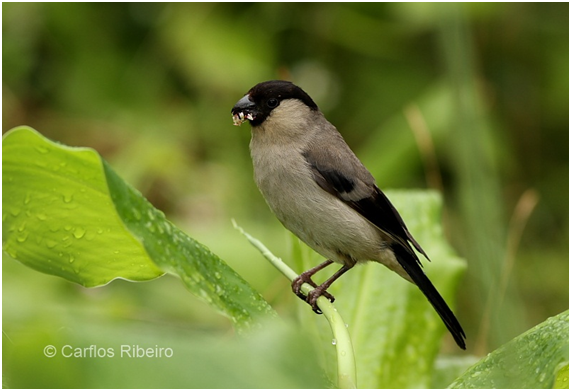
Figure 2: Priolo feeds on a wide variety of plant species.
After a huge effort by several public, private and popular entities, it was possible in 2010 to reduce the degree of threat of Critically Endangered to In DangerBut those involved in this project did not stop there and continued their efforts for the conservation of this species. In 2016, the result of more than a decade's worth of conservation work bears impressive fruit! Priolo lowered its conservation status to Vulnerable! Unfortunately, it is quite rare to see examples of this effectiveness in conservation, but this little bird managed to be an example and follow, not only in Portugal but all over the world! It was not an easy path, but the perseverance and dedication of everyone brought its fruits.

Figure 3: Current classification of the Priolo Conservation Statute as Vulnerable. In the diagram we can see that the degrees of threat decrease from right to left.
During bird watching outingsBirdwatchingcarried out by Picos de Aventura, the Priolo is often the bird of choice to see! In these cases, our team makes a point of transmitting to visitors the whole history of this bird and all the effort that has involved (and involves) its conservation. It is one of the most emblematic species in the Region, and we are very proud to tell its story. This demonstrates that the conservation of species is extremely important for the ecosystem, for the Region and for all of us.
References:
BirdLife International. 2009. Species factsheet: Pyrrhula murina. Disponível em: http://www.birdlife.org.
Ceia, R. 2008. Monitorização da população de Priolo. Relatório da acção F6 do Projecto LIFE Priolo. Sociedade Portuguesa para o Estudo das Aves, Lisboa.
Ceia, R. S., Ramos, J. A., Heleno, R. H., Hilton, G. M. and Marques, T. A. 2011. Status assessment of the Critically Endangered Azores Bullfinch Pyrrhula murina. Bird Conservation International 21: 477-489.
SPEA. 2010. O Priolo. Disponível em: http://life-priolo.spea.pt/pt/o-priolo-e-o-seu-habitat/o-priolo/.

