
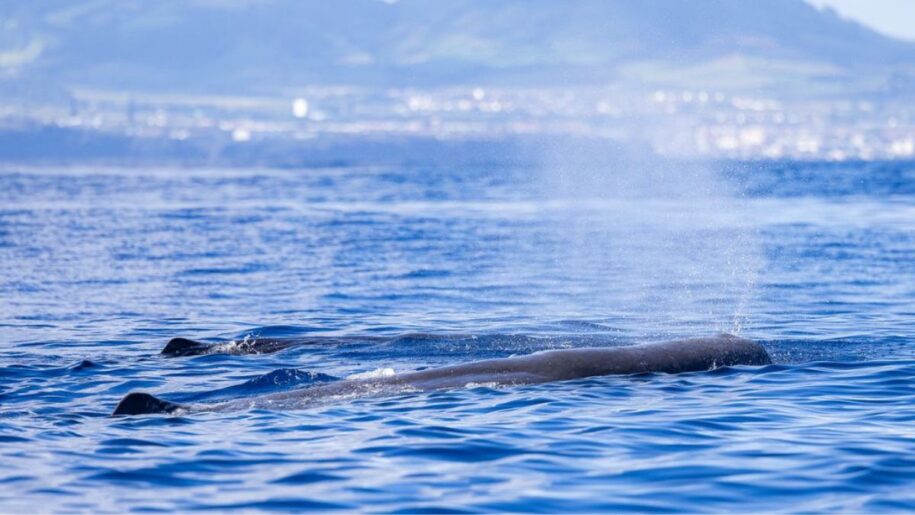
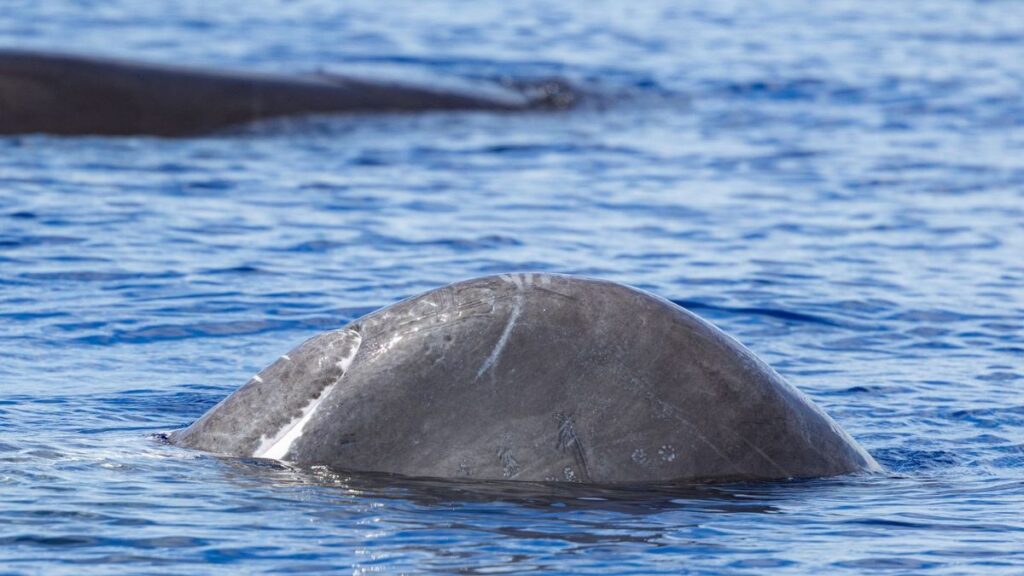
Sperm whales are the largest toothed whales in the world and one of the most iconic species found in the Azores. Although they are regularly seen resting and socializing at the surface, they spend much of their lives in the depths of the ocean, searching for food.
So, what exactly do these giants eat? The simple answer is: mostly squid. However, the reality is far more fascinating.
Sperm whales are extraordinary divers, capable of reaching depths of over 1,000 metres, where they forage in the mesopelagic zone and even deeper waters. In this dark environment, where sunlight barely penetrates, countless species of cephalopods have adapted to life in the deep sea.
One of the most comprehensive studies conducted in the Azores examined the stomach contents of sperm whales and identified remains from more than 40 cephalopod species, revealing a remarkably diverse diet. Despite this diversity, a few families clearly dominate. Squid belonging to the Octopoteuthidae and Histioteuthidae families account for most of the biomass consumed, followed by other deep-sea species, including the famous giant squid (Architeuthis). Interestingly, although giant squid are part of the sperm whale's diet, they make up only a small proportion of their overall food intake, contradicting the popular belief that sperm whales feed mainly on giant squid.
Another fascinating finding is that many of the prey species possess bioluminescent organs. It is estimated that around three-quarters of the identified cephalopod species can produce light, a common adaptation in the deep ocean. In addition, most of these squid have nearly neutral buoyancy and move relatively slowly. This suggests that, rather than constantly chasing fast-moving prey, sperm whales often encounter aggregations of squid at depth, using their sophisticated echolocation to detect and capture them with remarkable precision.
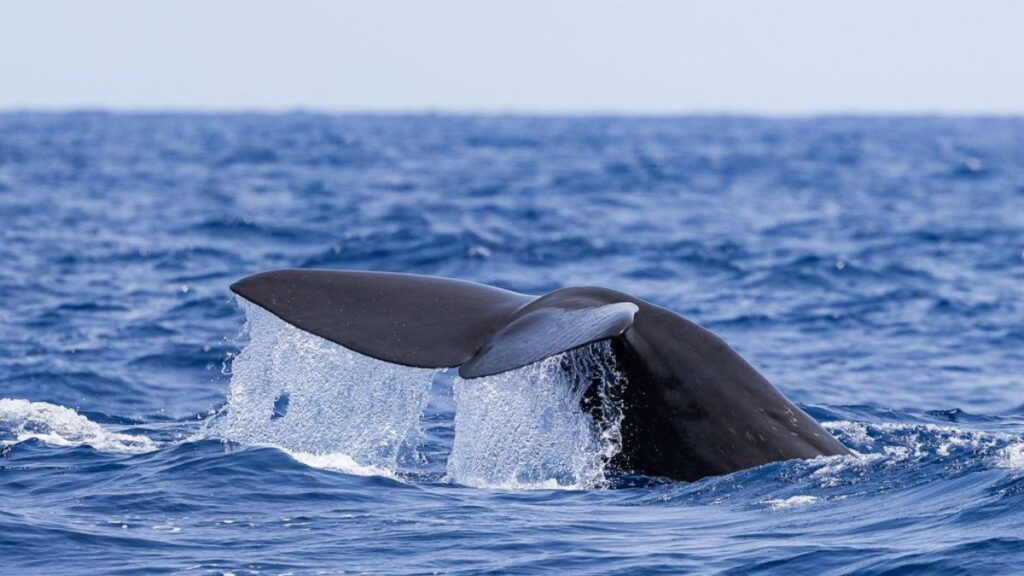
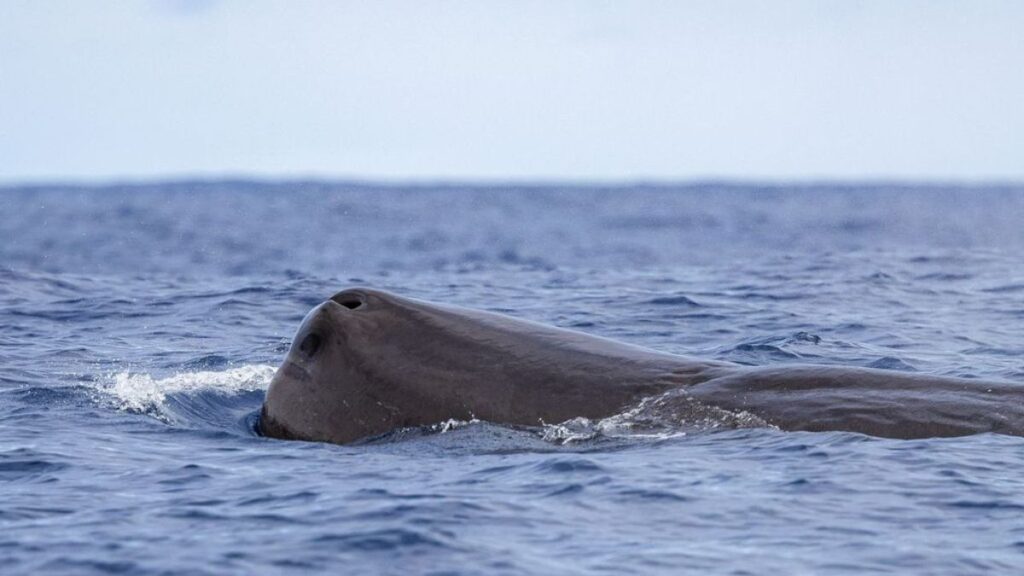
For many years, our understanding of sperm whale feeding ecology relied mainly on the analysis of stomach contents from stranded or historically hunted animals. Today, scientific techniques have advanced considerably. A recent study conducted in the Azores used DNA extracted from faecal samples to identify the prey consumed by sperm whales, allowing researchers to investigate their diet without disturbing the animals. The results confirmed that cephalopods remain the dominant component of their diet but also revealed the presence of several mesopelagic fish species, showing that their feeding habits are more varied than previously thought.
Research has also benefited greatly from the collaboration between scientists and whale-watching companies. Whenever fragments of squid are found floating at the surface, often left behind after a recent feeding event, they can be collected for scientific analysis.
As part of the MONICEPH project, researchers and whale-watching operators in the Azores collected cephalopod remains from the sea surface. DNA analysis revealed that all the samples belonged to the seven-arm octopus (Haliphron atlanticus), a deep-sea species that appears to play an important role in the diet of sperm whales, despite still being relatively poorly understood by scientists.
Every deep dive made by a sperm whale is a journey into one of the least explored ecosystems on Earth. By studying what these animals eat, researchers not only gain a better understanding of this remarkable species but also uncover valuable insights into the biodiversity of the deep waters surrounding the Azores. So, the next time you watch a sperm whale arch its back and disappear beneath the surface, remember that it is about to enter a hidden world where one of the ocean's most extraordinary hunts takes place.
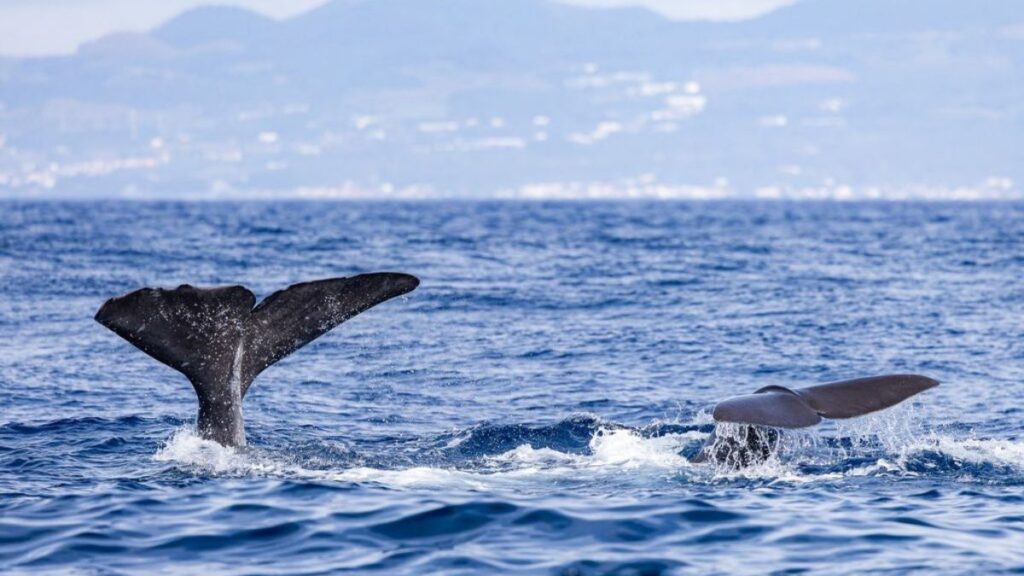
Blog article written by our biologist Gina Salazar.
Are you looking for whale and dolphin watching in the Azores? Book you experience with us here.
References
Clarke, M. R., Martins, H. R., & Pascoe, P. (1993). The diet of sperm whales (Physeter macrocephalus Linnaeus 1758) off the Azores. Philosophical Transactions of the Royal Society of London. Series B: Biological Sciences, 339(1287), 67–82. https://doi.org/10.1098/rstb.1993.0005
Claver, C., de Amézaga, L. G., Mendibil, I., Canals, O., Prieto, R., Cascão, I., Oliveira, C., Silva, M. A., & Rodríguez-Ezpeleta, N. (2026). Mesopelagic fish and cephalopods in the diet of rorquals (Balaenoptera spp.) and sperm whales (Physeter macrocephalus) around the Azores using fecal and environmental DNA. Marine Mammal Science, 42(1), e70086. https://doi.org/10.1111/mms.70086
Suciu, S. R., Zereba, J., Fiori, L., & Azevedo, J. M. N. (2021). Whale-watching contributions for the study of cetacean-cephalopod interactions. Arquipélago – Life and Marine Sciences, 38, 1–6.

