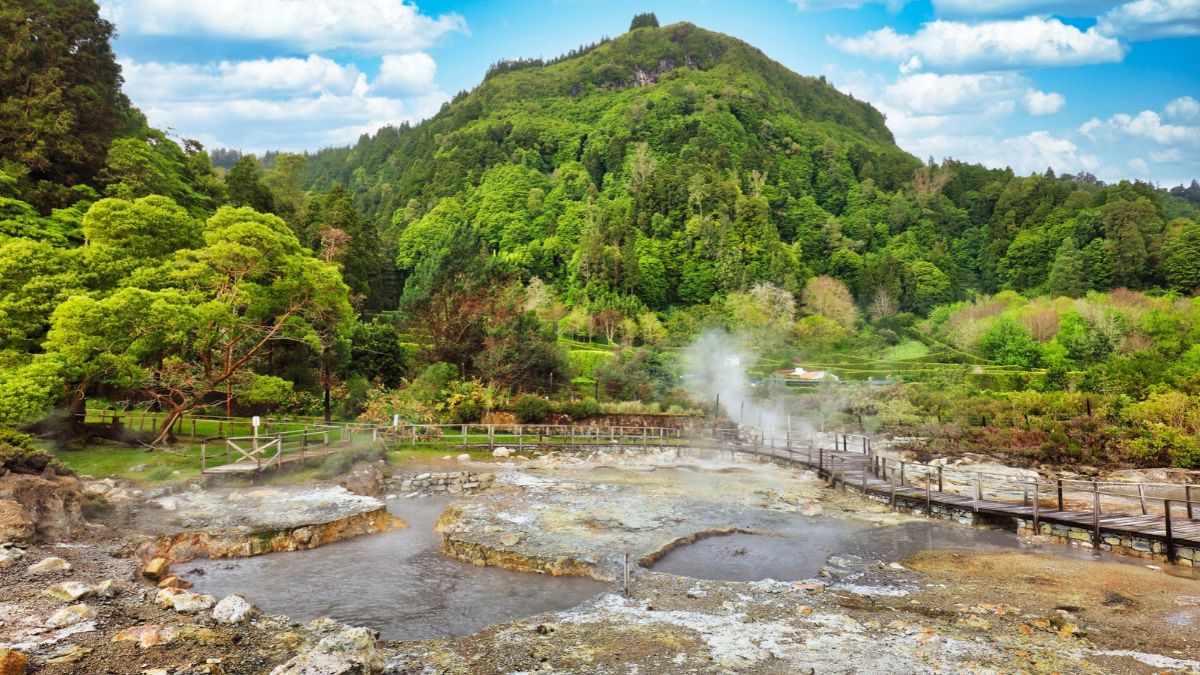

Have you ever wondered how water gets hot underground? In the Azores, the answer lies in volcanoes! Discover how this natural phenomenon works.
The Secret Lies Beneath Our Feet
In the Azores, volcanic activity is part of the landscape and is responsible for some of the archipelago’s most fascinating natural phenomena. One of these is thermal water, perfect for a relaxing soak surrounded by nature.
But how does the water actually get hot?
It all starts with rainwater seeping into the ground and through cracks in the rocks. As it travels underground, it can reach areas where the rocks are heated by geothermal energy. The water warms up naturally and, when it finds a path to the surface, it can form thermal springs.
This is how volcanic activity helps create some of the most distinctive experiences in the Azores!
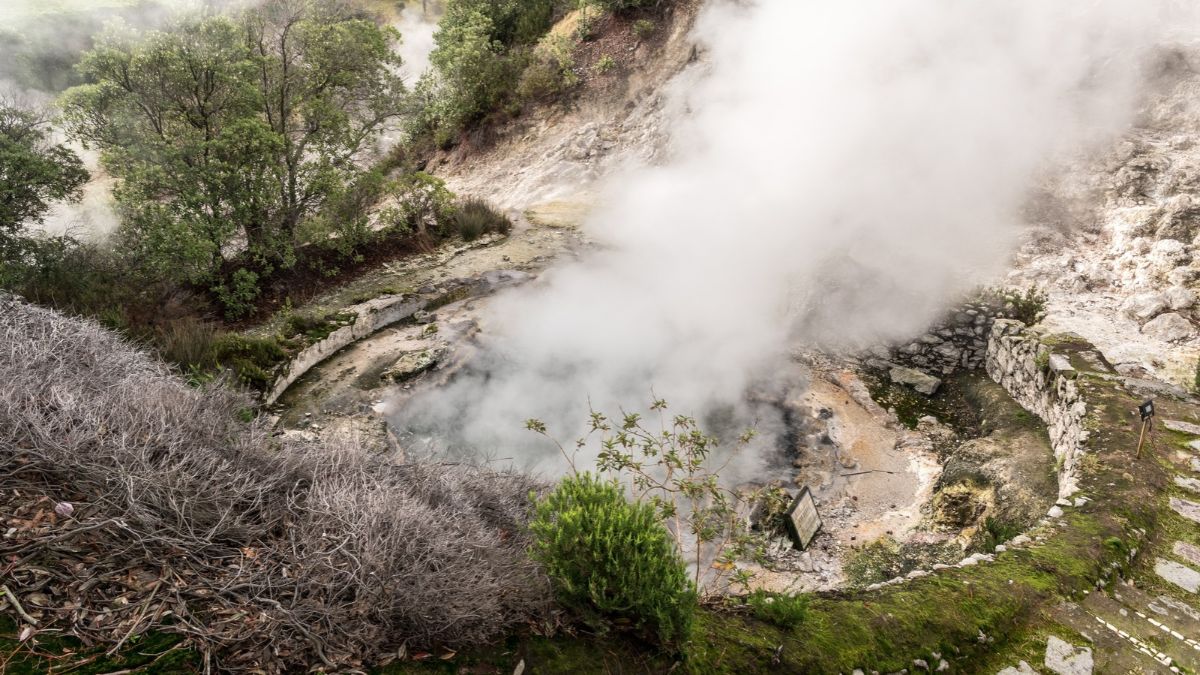
Did You Know Water Can Heat Up Without the Sun?
You don’t need a hot, sunny day to find naturally warm water! In volcanic areas, heat comes from deep within the Earth and can warm the water flowing underground.
But here’s an interesting fact: not all thermal waters have the same temperature. This depends on several factors, including how deep the water travels, how long it remains in contact with hot rocks and whether it mixes with cooler water.
That’s why some springs are perfect for a relaxing soak, while other places feature steam vents, fumaroles and hot springs where the heat is much more intense.
Furnas: Where the Earth Comes Alive
If there’s one place on São Miguel where you can easily see volcanic activity at work, it’s the Furnas Valley.
Here, you’ll find fumaroles, thermal springs and natural hot springs releasing steam and gases. It’s a striking reminder of the energy beneath the island’s surface.
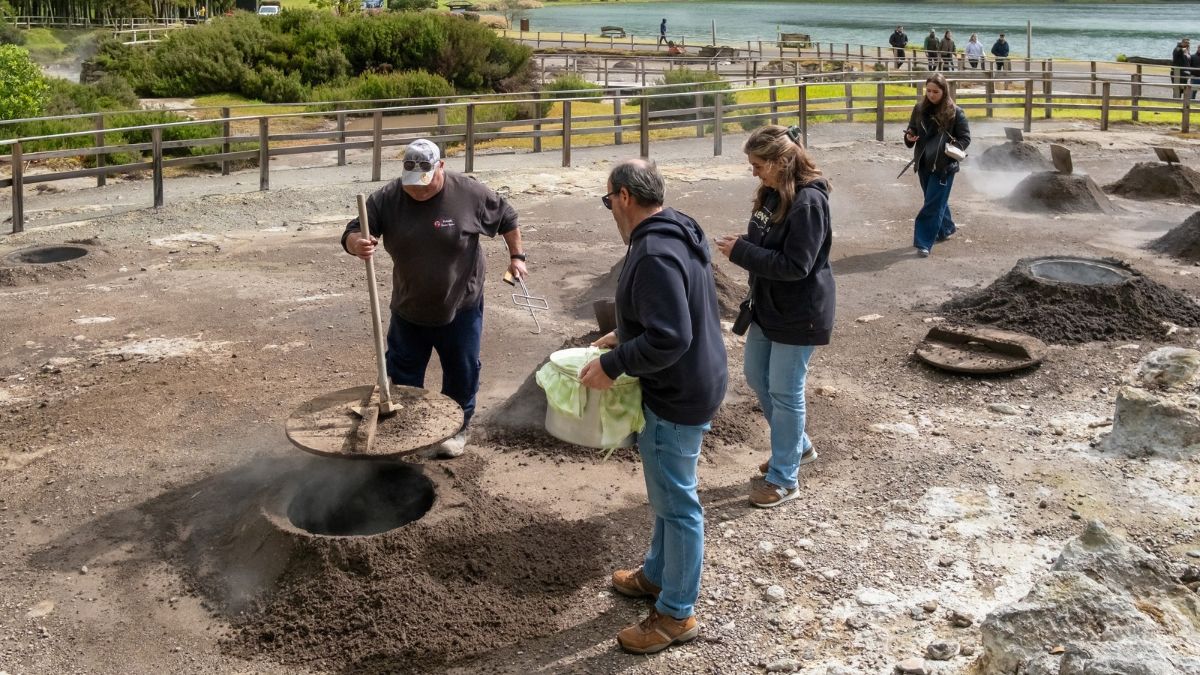
And did you know this natural heat is also used for cooking?
Furnas is home to the famous Cozido das Furnas, a traditional Portuguese stew. The ingredients are placed in a pot, which is then buried in the ground in an area heated by geothermal energy. The dish cooks slowly using the Earth’s natural heat.
It’s a wonderful example of how a geological phenomenon can become a unique culinary experience!
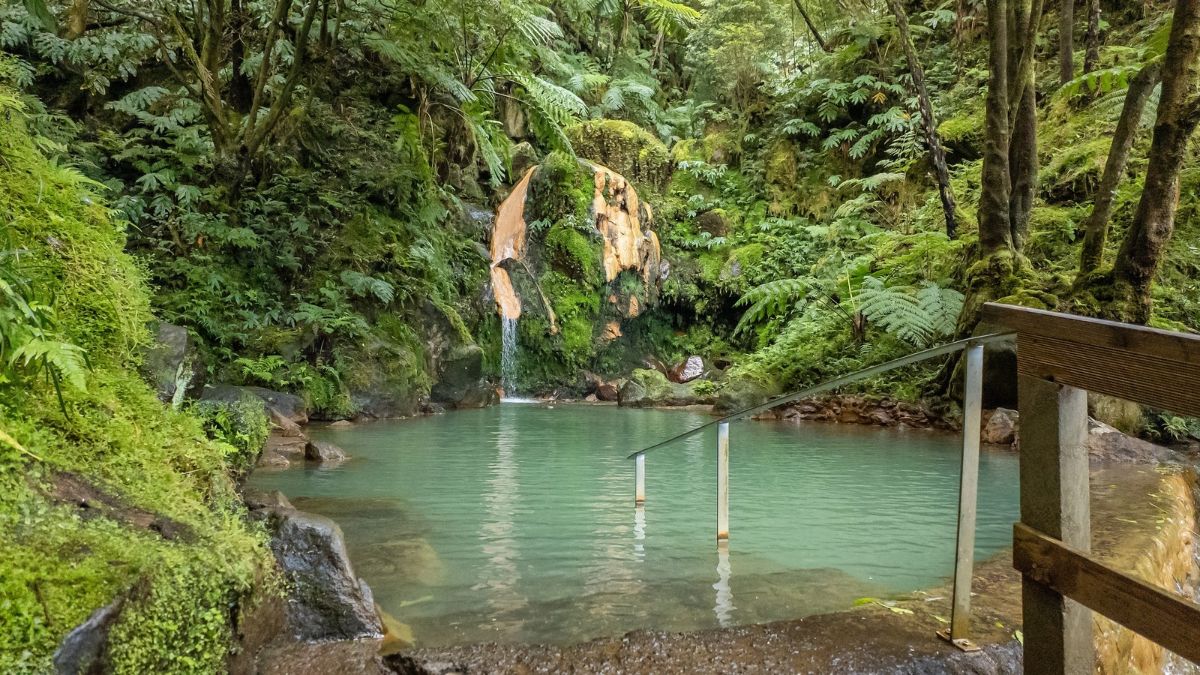
Caldeira Velha: A Warm Bath in the Heart of the Forest
Imagine bathing in warm water surrounded by lush tropical vegetation and the sound of a waterfall. That’s the experience Caldeira Velha has to offer.
Located on the slopes of Serra de Água de Pau, this natural monument combines lush vegetation, waterfalls and water heated by the area’s geothermal activity.
Here, heat from deep within the Earth creates the perfect conditions for natural bathing pools, in a setting where nature takes centre stage.
It’s also a great example of how volcanic activity has shaped landscapes that are quite different from those found in many other regions.
Ferraria: What Happens When Hot Water Meets the Sea?
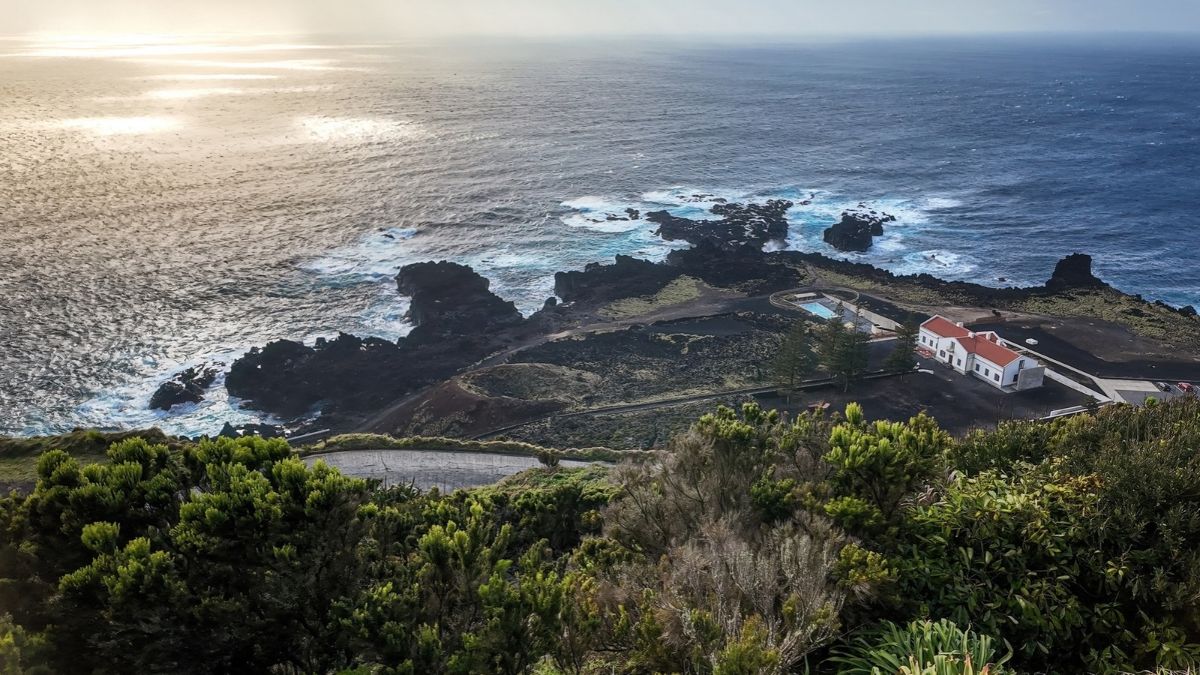
At Ponta da Ferraria, on the western coast of São Miguel, something even more fascinating happens: a geothermal hot spring beneath the water warms the sea nearby.
The result? A natural bathing area where water temperature can vary considerably depending on the tide, sea conditions and how much thermal water mixes with the cold waters of the Atlantic
This combination is precisely what makes Ferraria so special. Unlike a conventional thermal pool, the ocean itself influences the experience, making every visit a little different.
If you’re planning to take a dip, remember to check sea conditions and follow local safety advice before entering the water.
Why Are Thermal Waters Different from One Another?
Temperature isn’t the only thing that varies from one thermal spring to another. The water’s mineral composition can also differ.
As water travels underground, it comes into contact with different types of rock and can absorb minerals. The local geology therefore influences the characteristics of the water that eventually reaches the surface.
In some volcanic areas, you may also notice mineral deposits, gas emissions and changes in the colour of the water or soil. These are small signs of geothermal activity that help explain the diversity of the Azores’ landscapes.
So, even if two springs look similar, their temperatures and characteristics can be quite different. And, of course, not all thermal waters are suitable for bathing. Always follow local guidance and use only designated bathing areas.
The Azores: A Destination Where Nature Never Stops Surprising
Thermal waters are much more than an invitation to relax. They offer a chance to discover the volcanic origins of the Azores and understand how the energy beneath the Earth’s surface continues to shape the landscape, local cuisine and experiences available throughout the archipelago.
From the fumaroles of Furnas to the warm pools of Caldeira Velha and the unique setting of Ferraria, each place reveals a different side of this natural phenomenon.
Next time you take a dip in a thermal pool on São Miguel, remember: the water warming you is also a small glimpse into the energy beneath your feet. And in the Azores, even a simple swim can become a fascinating discovery of nature!