
Bottlenose dolphins (Tursiops truncatus) are recognised as one of the most communicative cetacean species, with an extremely sophisticated acoustic communication system. Every sound produced by these animals serves a specific purpose, whether to identify individuals, coordinate behaviours or convey emotional states, making the social lives of these dolphins a true mosaic of complex acoustic interactions.
From a very young age, each bottlenose dolphin develops a signature whistle that is unique to them and functions much like a “name”. This whistle allows individuals to recognise and call one another and to maintain contact even over distances, reinforcing the social cohesion of the group. Recent research suggests that dolphins can recognise the signature whistles of other individuals even after years of separation, demonstrating advanced social memory and a sense of individual identity that is rare in the animal kingdom.
However, the use of whistles is not limited to identification. They can be modulated in pitch, duration and rhythm to convey different messages, such as a willingness to interact, a warning of danger or even an invitation to engage in joint activities, demonstrating remarkable communicative flexibility.
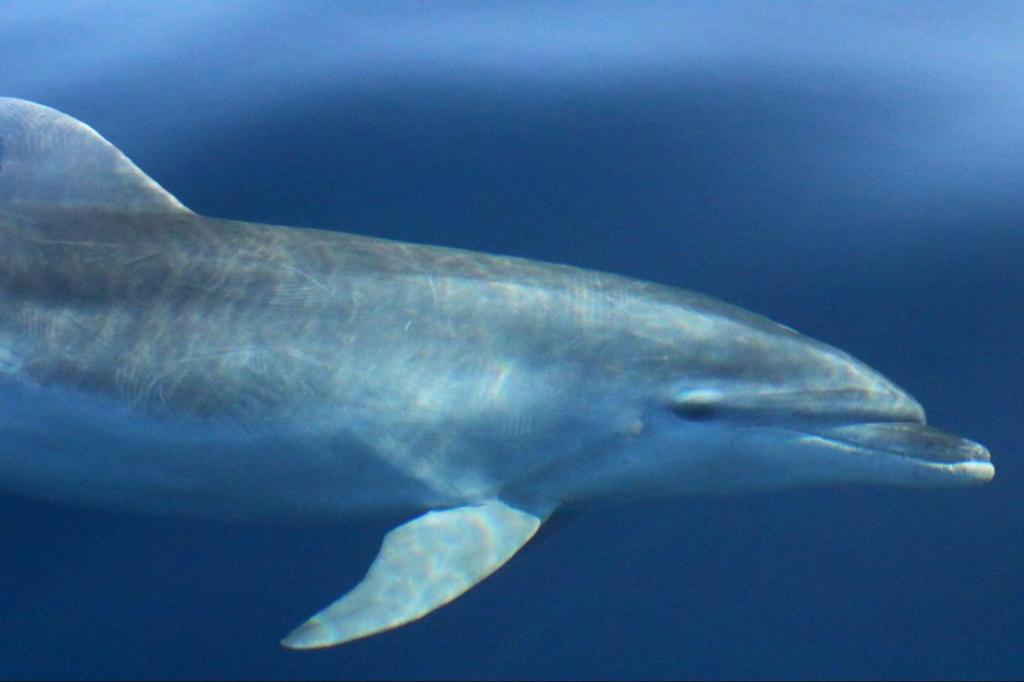
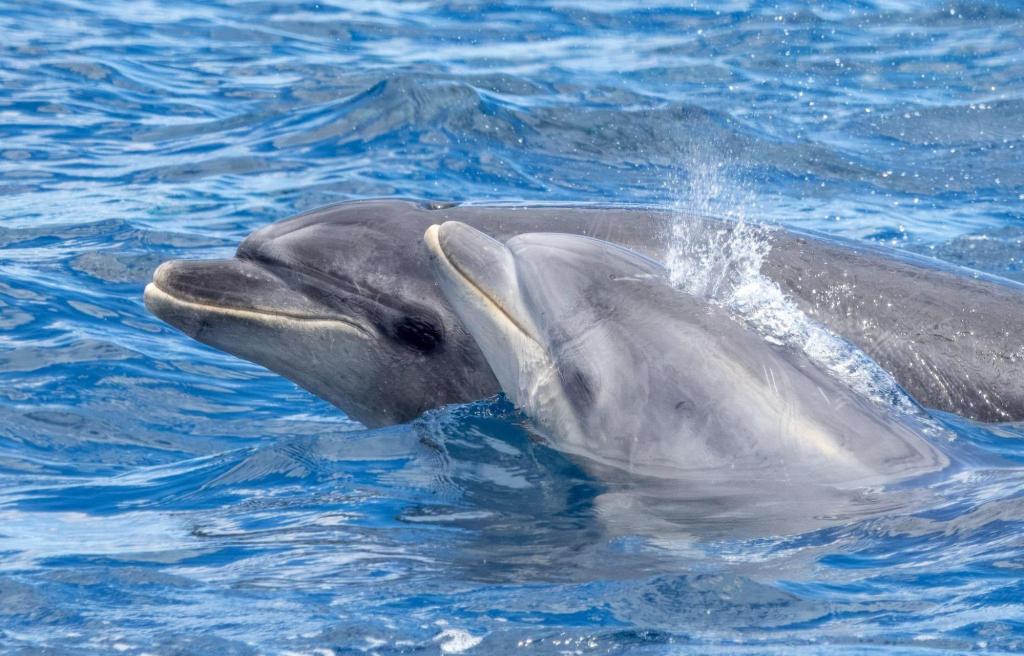
In addition to whistles, bottlenose dolphins produce high-frequency clicks that are essential for echolocation, a type of natural sonar that allows them to “see” through sound. These clicks help them locate prey, map the underwater environment and navigate in dark or murky waters where visibility is limited. Echolocation is not merely a tool for orientation; it may also allow dolphins to indirectly convey information to other members of the group about the location of food or obstacles, functioning as a form of contextual communication linked to survival and cooperation.
Another important component of the bottlenose dolphin’s acoustic repertoire is pulsed sounds, produced during social interactions, moments of excitement or play. These sounds complement whistles and clicks, allowing dolphins to express emotional states or coordinate more complex behaviours within the group. The combination of these three types of sounds — signature whistles, echolocation clicks and pulsed sounds — creates a rich and varied repertoire that allows dolphins to communicate information about identity, location, intentions and emotions, making them particularly remarkable among cetaceans in terms of vocal complexity.

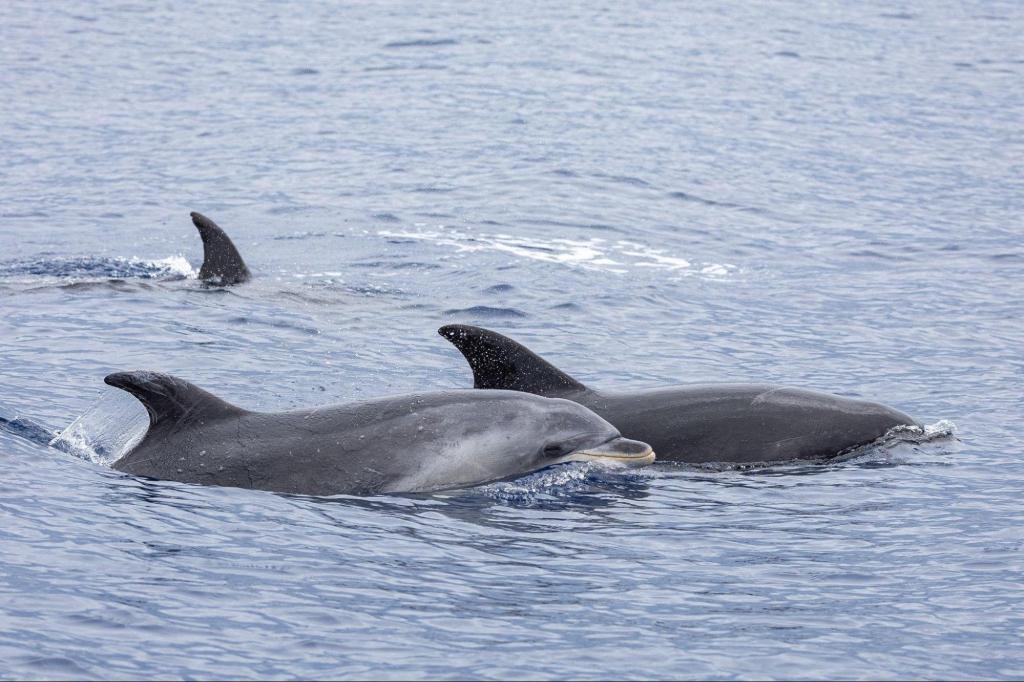
The acoustic communication of bottlenose dolphins is also highly adaptable. An individual can adjust the frequency, duration and rhythm of its whistles and clicks according to the size of the group, the proximity of other members and the social situation. For example, larger groups tend to produce more whistles per minute in order to maintain constant contact, while more intimate interactions or hunting situations may lead to longer, repetitive or more highly modulated sound patterns. This flexibility demonstrates not only the animals’ intelligence but also the sophistication of their communication system, which functions as a practical form of language capable of conveying multiple layers of information simultaneously.
What makes this communication particularly fascinating is that, despite being entirely acoustic, it reveals high levels of social and cognitive organisation. Bottlenose dolphins combine different types of sounds to coordinate group activities, strengthen social bonds and share information that is crucial to the survival of the group. Every whistle, click or pulsed sound plays a role, and correctly interpreting these signals is essential for maintaining group cohesion and cooperation between individuals. This complex acoustic repertoire places bottlenose dolphins among the most sophisticated marine animals in terms of communication, comparable in some respects to forms of language observed in birds and primates, and highlighting their remarkable communicative abilities.
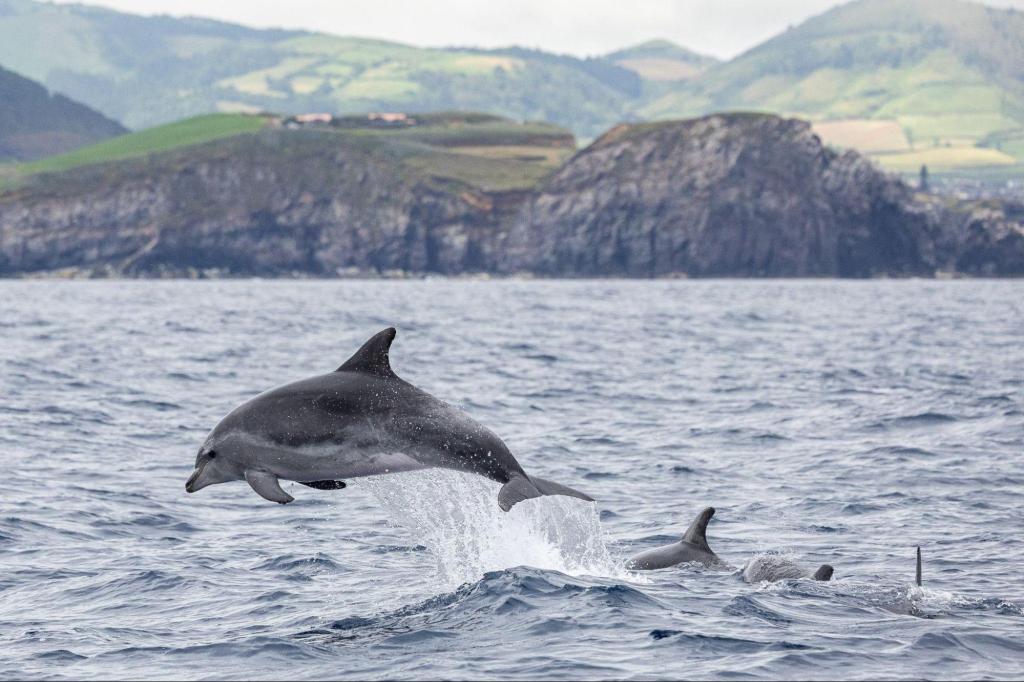
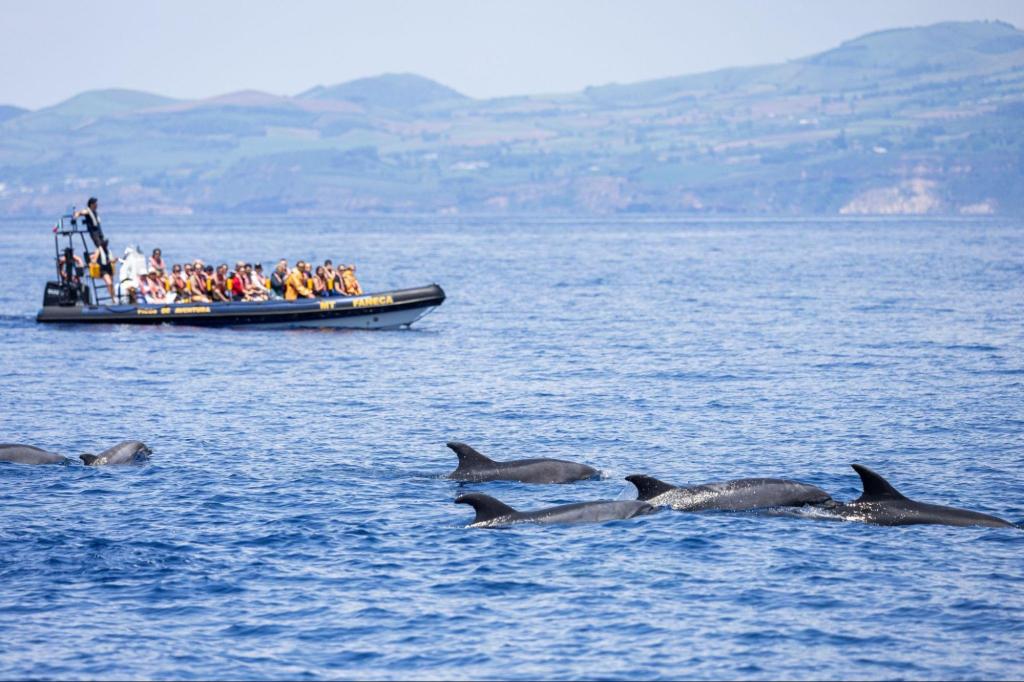
In short, the acoustic communication of bottlenose dolphins is rich, flexible and functional. Every sound carries meaning, every vocal pattern conveys information, and the entire repertoire contributes to the social life of the group. Observing these animals interacting is like witnessing a world of underwater conversations, where intelligence, cooperation and individual identity are expressed in a unique way. Bottlenose dolphins show us that communication in the ocean can be just as complex and sophisticated as any form of communication on land, offering a fascinating insight into the minds of some of the most intelligent and social animals on the planet.
BIBLIOGRAPHY
King, S. L., & Janik, V. M. (2013). Bottlenose dolphins can use learned vocal labels to address each other. Proceedings of the National Academy of Sciences of the United States of America, 110(32), 13216–13221. https://doi.org/10.1073/pnas.1304459110
La Manna, G., Rako-Gospić, N., Pace, D. S., Bonizzoni, S., Di Iorio, L., Polimeno, L., Perretti, F., Ronchetti, F., Giacomini, G., Pavan, G., Pedrazzi, G., Labach, H., & Ceccherelli, G. (2022). Determinants of variability in signature whistles of the Mediterranean common bottlenose dolphin. Scientific Reports, 12(1), 6980. https://doi.org/10.1038/s41598-022-10920-7
Luís, A. R., Couchinho, M. N., & Santos, M. E. D. (2015). Signature whistles in wild bottlenose dolphins: long-term stability and emission rates. Acta Ethologica, 19(2), 113–122. https://doi.org/10.1007/s10211-015-0230-z
Quick, N. J., & Janik, V. M. (2012). Bottlenose dolphins exchange signature whistles when meeting at sea. Proceedings. Biological Sciences, 279(1738), 2539–2545. https://doi.org/10.1098/rspb.2011.2537
Sayigh, L. S., Haddad, N. E., Tyack, P. L., Janik, V. M., Wells, R. S., & Jensen, F. H. (2023). Bottlenose dolphin mothers modify signature whistles in the presence of their own calves. Proceedings of the National Academy of Sciences, 120(27), e2300262120. https://doi.org/10.1073/pnas.2300262120